Content Summary
To protect your home from water damage, start by regularly inspecting your plumbing, roof, and foundation for leaks or cracks. Install water detection devices near appliances and in basements for early warnings.
Upgrade to high-quality, water-resistant materials and appliances with built-in leak detection. Maintain proper drainage by cleaning gutters regularly and ensuring your landscape slopes away from your home. Seal windows and doors to prevent water intrusion during storms.
Create an emergency plan for severe weather events and keep supplies like sandbags on hand. By implementing these strategies, you’ll greatly reduce your risk of costly water damage. Discover more ways to safeguard your home and preserve its value.
Key Takeaways
- 1. Install and maintain gutters and downspouts to direct water away from your home’s foundation.
- 2. Regularly inspect and repair plumbing fixtures, pipes, and appliances to prevent leaks.
- 3. Waterproof basements and crawl spaces using appropriate sealants and drainage systems.
- 4. Maintain proper grading around your home to ensure water flows away from the structure.
- 5. Install water leak detectors near appliances and in flood-prone areas for early warning.
Causes of Water Damage to Your Home
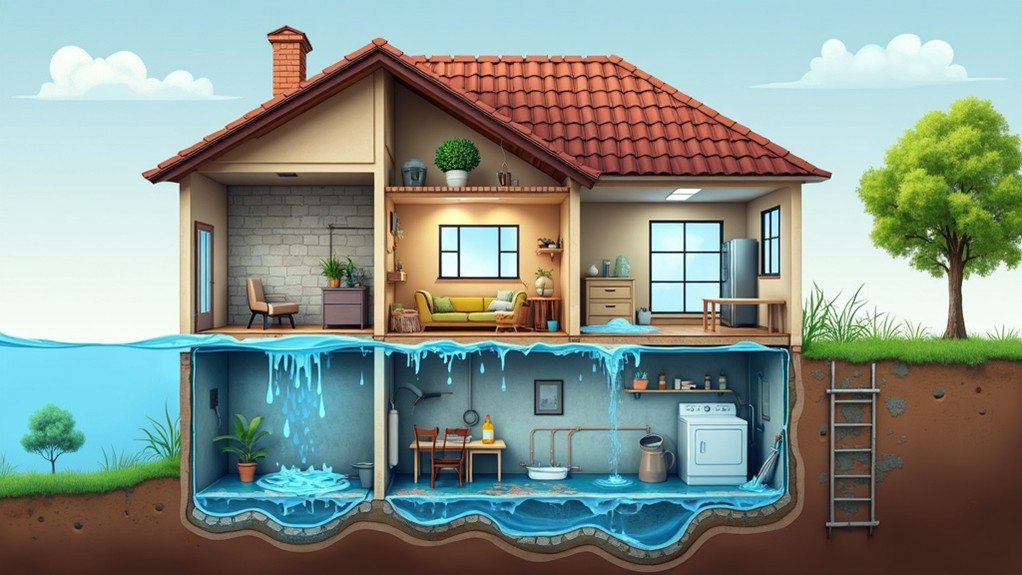
You’re facing multiple threats regarding water damage in your home. From plumbing system failures and weather-related intrusions to appliance leaks and foundation issues, the potential sources are varied and often hidden.
Understanding these primary causes will help you take proactive steps to protect your property and prevent costly water damage.
While protecting your home from water damage is essential, it’s also important to reflect on how homeownership affects your finances, including potential tax benefits such as mortgage interest deductions and property tax write-offs.
Plumbing System Failures
Among the various causes of water damage to your home, plumbing system failures rank as one of the most common and costly culprits.
With repair costs averaging $2,500 to $5,000, it’s essential to prioritize plumbing maintenance tips and address common plumbing issues promptly.
Be vigilant for signs of leaks, such as unexplained increases in water bills or damp spots on walls and ceilings.
Regular inspections can help prevent minor issues from escalating into major problems, saving you time and money in the long run.
To protect your home:
- 1. Regularly inspect and maintain appliances like washing machines and dishwashers
- 2. Monitor water pressure, keeping it between 40-70 psi
- 3. Replace aging pipes, considering durable pipe replacement options
- 4. Have emergency plumbing services on speed dial for quick response
Don’t overlook small leaks; even a dripping faucet can waste 57 gallons weekly.
Weather-Related Water Intrusion
While plumbing issues can wreak havoc inside your home, Mother Nature poses her own set of challenges in relation to water damage. Heavy rainfall, snowmelt, hurricanes, and prolonged wet periods can all contribute to water intrusion.
First-time homebuyers often underestimate the importance of preparing for weather-related water damage, which can lead to significant financial strain. You’ll need to be prepared for various scenarios, from flash floods dropping 2 inches of rain in an hour to storm surges pushing seawater inland.
To protect your property, focus on storm preparation tips like reinforcing your home’s exterior and implementing proper drainage solutions. Consider installing water-resistant materials in vulnerable areas and investigate flood insurance options to safeguard your investment.
Develop emergency response plans for different weather events, including rapid snowmelt and wind-driven rain. By taking proactive measures, you’ll minimize the risk of weather-related water damage and maintain control over your home’s integrity.
Appliance and HVAC Leaks
Lurking within your home’s walls and beneath your floors, appliances and HVAC systems can be silent culprits of water damage. To protect your home, prioritize leak detection and appliance maintenance.
Regular inspections of washing machines, dishwashers, and refrigerators can prevent costly water damage from faulty connections. Regular exterior inspections are also essential to prevent water infiltration from outside sources.
Remember, 75% of home water damage claims stem from plumbing and appliance failures. Implement these water damage prevention strategies:
- 1. Replace old hoses and seals every five years
- 2. Check HVAC condensate lines for clogs
- 3. Install water leak detectors near appliances
- 4. Schedule professional HVAC inspections annually
Don’t overlook your washing machine—as previously mentioned, single leak can waste 57 gallons weekly.
Foundation and Structural Issues
Beyond appliance and HVAC issues, your home’s foundation stands as a vital line of defense against water damage. Poor drainage systems can lead to water pooling and structural instability, while foundation cracks allow moisture infiltration.
To protect your investment, implement foundation drainage solutions like French drains or grading improvements. Address soil stabilization methods to prevent erosion and settling, which can compromise your home’s structural support. Employ water diversion techniques, ensuring gutters and downspouts direct runoff away from your foundation.
Regular exterior inspections are important to identify potential issues before they escalate into major problems. This proactive approach can save you considerable time and money in the long run.
Consider erosion control measures such as retaining walls or vegetation to maintain proper soil levels. Investigate foundation waterproofing options, including sealants and membranes, to create an additional barrier against moisture.
Regular inspections are essential; identify and repair minor issues before they escalate into major structural problems. By proactively managing your home’s foundation, you’ll greatly reduce the risk of water-related damage.
Effects of Water Damage on Your Home
Water damage can wreak havoc on your home, compromising its structural integrity and fostering mold growth within days.
You’ll face potential electrical hazards as water-damaged wiring poses serious risks to your safety.
Regular exterior inspections are essential for identifying and preventing water-related issues before they escalate.
Prompt professional assessment of any identified problems can save you from costly repairs down the line.
Furthermore, the cumulative effects of water damage can greatly depreciate your property value, making prevention and swift action essential for protecting your investment.
Structural Integrity Compromised
While many homeowners focus on the immediate effects of water damage, it’s essential to understand how it can compromise your home’s structural integrity over time.
Water infiltration can lead to:
- 1. Wood rot in beams and joists, weakening your home’s framework
- 2. Mold growth that degrades structural materials
- 3. Foundation damage from soil erosion and hydrostatic pressure
- 4. Corrosion of metal components, including plumbing and electrical systems
To protect your investment, implement robust waterproofing techniques and drainage solutions.
Install moisture barriers and carefully select building materials that resist water damage.
Regular home inspections can identify potential issues before they escalate, ensuring peace of mind and saving you from costly repairs in the future.
By addressing water-related problems promptly, you’ll maintain your home’s structural integrity and avoid costly repairs.
Don’t underestimate the long-term impact of water damage – take control of your home’s future by prioritizing prevention and early intervention.
Mold and Mildew Growth
One of the most insidious consequences of water damage is the rapid growth of mold and mildew. Within 24 to 48 hours of water exposure, these fungi can begin to thrive, posing serious health risks and potentially decreasing your property value by 10-20%.
To protect your home, implement preventive measures like maintaining indoor humidity below 50% and improving air circulation. Install effective ventilation systems to reduce moisture buildup, especially in bathrooms and kitchens. Regular maintenance and prompt repairs are essential for equity building and protecting your investment.
Homeowners have the advantage of controlling their living environment and making necessary improvements to prevent water damage. If you suspect mold growth, act quickly to assess the situation and consider professional mold remediation services.
Electrical System Hazards
Lurking beneath the surface, electrical system hazards pose a notable threat to homes affected by water damage. Water infiltration can compromise your home’s electrical safety, leading to short circuits, fires, or electrocution risks.
Understanding these risks is essential, especially in areas like Colorado Springs where market conditions can impact home buying and selling decisions. To protect your property and loved ones, implement these vital measures:
- 1. Install GFCI outlets in moisture-prone areas
- 2. Guarantee proper grounding techniques throughout your home
- 3. Use moisture-resistant electrical installations in high-risk zones
- 4. Conduct regular inspections for hazard identification
Don’t underestimate the importance of moisture control in maintaining electrical system integrity. Circuit protection devices like GFCIs can cut off power instantly if water contact occurs, markedly reducing risks.
Property Value Depreciation
The silent threat of water damage extends far beyond immediate repair costs, potentially eroding your home’s value over time. You’re facing a potential 20% or more decrease in property value, depending on the damage’s severity.
This depreciation isn’t just about physical deterioration; it’s about market trends and buyer perceptions. Your home may become a high-risk investment in buyers’ eyes, leading to significant resale challenges.
Experienced realtors can provide valuable insights on how water damage affects local market dynamics and property values, helping you make informed decisions about repairs and potential sales.
Mold growth from water damage compounds the issue, as remediation costs can deter potential buyers. Additionally, increased insurance premiums due to water-related claims can further impact your home’s marketability.
To protect your investment and maintain property value, implement regular maintenance and prevention measures. By doing so, you’ll not only preserve your home’s condition but also its appeal in a competitive real estate market, safeguarding against potential investment risks.
How to Protect Your Home From Water Damage
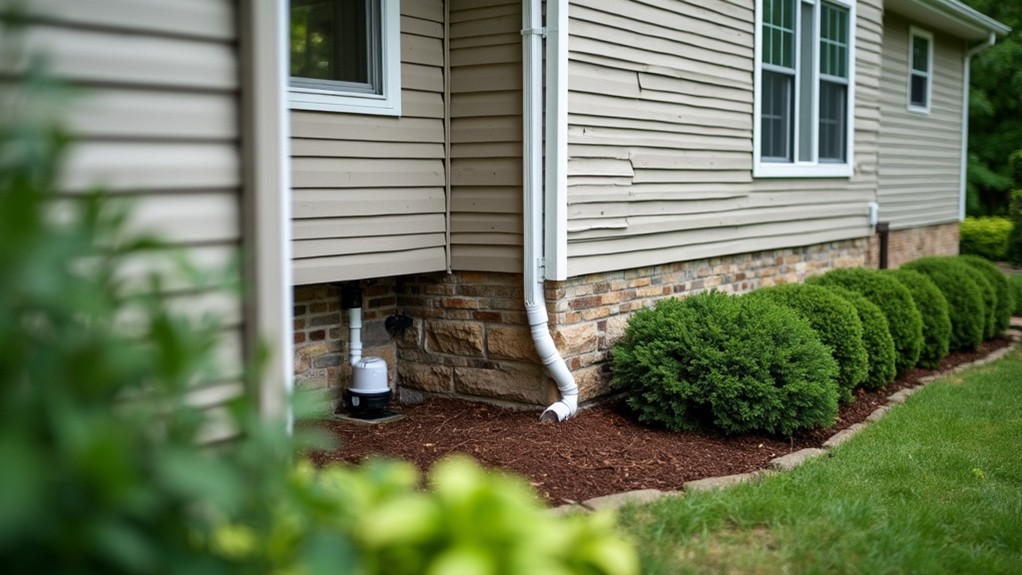
You can safeguard your home from water damage by taking proactive steps to strengthen its defenses.
Start by sealing foundation cracks promptly and installing water detection devices in high-risk areas.
Upgrading your plumbing and appliances, regularly inspecting and maintaining gutters, and implementing proper landscaping for effective water management will further protect your property from potential water-related issues.
When considering home protection strategies, it’s essential to consult with experienced real estate professionals who can provide valuable insights into property maintenance and preservation.
Seal Foundation Cracks Promptly
Sealing foundation cracks promptly is an essential step in safeguarding your home against water damage. Regular foundation maintenance and crack sealing can prevent costly repairs and structural issues.
To protect your investment:
- 1. Inspect your foundation frequently for visible cracks, no matter how small.
- 2. Use hydraulic cement or epoxy sealants designed for concrete repairs.
- 3. Verify proper grading to divert water away from your foundation.
- 4. Maintain outdoor drainage systems to minimize water accumulation.
Implement effective water diversion techniques to reduce pressure on foundation walls. For larger or complex cracks, consider professional assessment to address potential underlying issues.
By mastering these repair techniques, you’ll maintain control over your home’s integrity. Home warranty coverage may provide additional protection for your home’s systems and appliances, offering peace of mind for new homeowners.
Install Water Detection Devices
Building upon your foundation protection efforts, installing water detection devices adds another layer of defense against potential water damage.
These smart technology integrations offer real-time alerts and remote monitoring capabilities through smartphone apps, empowering you to catch leaks early. Place devices near high-risk areas like appliances and basements for maximum effectiveness.
Many options are budget-friendly and offer DIY installation tips, making them accessible for most homeowners. Much like closing costs in real estate, understanding the investment in water detection devices is essential for effective home management and protection.
These devices can be considered part of your overall home maintenance strategy, potentially saving you thousands in the long run. Remember to set maintenance reminders to test devices and replace batteries annually, ensuring they’re always operational.
By implementing this proactive measure, you’re not only safeguarding your home but potentially qualifying for insurance benefits. Some companies offer discounts for homes equipped with water detection devices, recognizing their role in risk management.
Take control of your home’s safety and invest in these small but powerful tools to prevent costly water damage.
Upgrade Plumbing and Appliances
Modernizing your home’s plumbing and appliances stands as an essential defense against water damage. Upgrade to stainless steel braided hoses for appliances like washing machines and dishwashers to reduce leak risks.
Install high-efficiency appliances with built-in leak detection systems for early warnings. Replace aging water heaters with models featuring automatic shut-off valves to prevent catastrophic leaks.
Implement these key plumbing upgrades for superior leak prevention:
- 1. Regularly inspect and replace aging pipes and fixtures
- 2. Install pressure-reducing valves to maintain water pressure below 70 psi
- 3. Upgrade to smart leak detection systems for real-time monitoring
- 4. Insulate pipes to prevent freezing and bursting in cold weather
Inspect and Maintain Gutters Regularly
While upgrading your plumbing system offers significant protection, don’t overlook the importance of your home’s exterior water management.
Regular gutter inspection and maintenance are vital to prevent water damage. Clean your gutters at least twice a year, removing leaves and debris to avoid clogs.
Implement these seasonal maintenance tips: guarantee downspouts direct water at least 6 feet from your foundation, and inspect for cracks or damage.
Create a DIY inspection checklist to stay on top of gutter health year-round. Look out for sagging or overflowing gutters, as these indicate blockages that require immediate attention.
Consider professional gutter services for thorough cleaning and assessment. If you spot issues, investigate gutter repair options promptly.
Proper Landscaping for Water Management
Proper landscaping plays an essential role in protecting your home from water damage. Implement these landscape design strategies for effective moisture management and erosion control:
- 1. Maintain a grading slope of at least 6 inches over 10 feet around your foundation to direct rainwater away from your home.
- 2. Plant trees and shrubs a minimum of 20 feet from your foundation to prevent root interference with plumbing and drainage systems.
- 3. Use mulch in your landscape to absorb excess rainwater and improve soil drainage.
- 4. Install French drains or dry wells in areas prone to water pooling.
Regularly inspect and maintain drainage ditches and swales to guarantee they’re functioning correctly.
Consider incorporating native planting into your landscape design, as these species are often better adapted to local moisture conditions.
Conclusion
You’ve now got the tools to protect your home from water damage. By addressing potential issues with your plumbing, weather-proofing, appliances, and foundation, you’re taking essential steps to safeguard your investment. Don’t forget to install water detection devices, upgrade outdated systems, maintain your gutters, and optimize your landscaping. With these proactive measures in place, you’ll greatly reduce the risk of costly water damage and enjoy peace of mind in your well-protected home.